
Social justice is an umbrella term and is based on the concepts of human rights and equality (Grant, 2007). There are four basic social justice principles when it comes to working with individuals:
- Access – greater equality of access to goods and services
- Equity – overcoming unfairness caused by unequal access to economic resources and power
- Rights – equal effective legal, industrial and political rights
- Participation – expanded opportunities for real participation in the decisions which govern their lives.
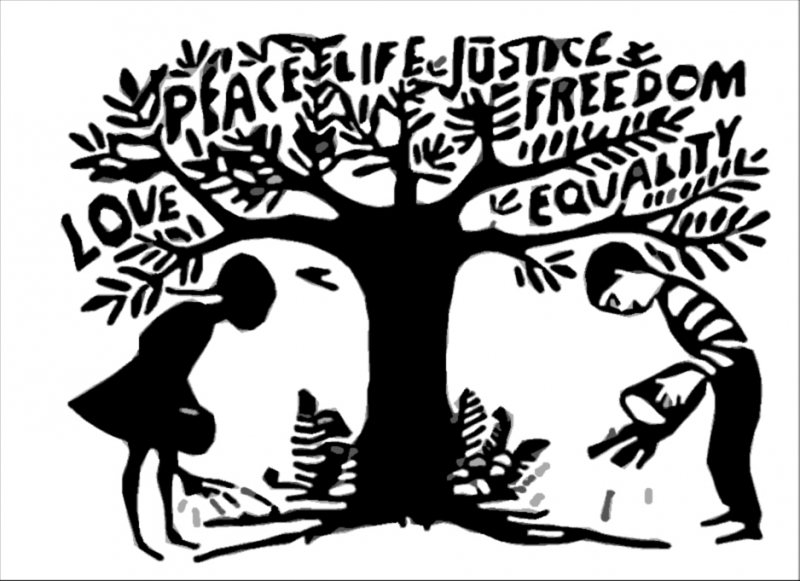
Many schools within New Zealand education are becoming increasingly diverse. Therefore, it is important to ensure our teachers meet the challenges of teaching in diverse schools and show the values of social justice within their practice. This requires them to become effective teachers who develop awareness around the rights and needs of every student (Apple, 2009). It is also important that our schools within our education system in New Zealand display equity and effective learning for all students no matter how diverse their school roll may be. All students must be included and their cultures respected throughout their learning experience. It is especially important for us as New Zealanders to incorporate biculturalism and Treaty of Waitangi into teaching to reflect the cultural diversity of New Zealand (Lourie, 2015).
In the past, and I am sure this is still an issue in some schools, there has been some differential treatment in New Zealand in minority education. Differential treatment refers to unequal opportunities for participation in schools (Lynch & Baker, 2015). This is a school issue due to the special responsibility of educators and those above them who shape the special character and context of the school. This differential treatment is harmful to the wellbeing of the individuals and inhibits their ability to feel as though they belong within their school and the education system.
One of The New Zealand Curriculum principles is inclusion. This principle states that “The curriculum is non-sexist, non-racist, and non-discriminatory” (Ministry of Education 2007). This principle is focused on addressing the needs and learning of the students. I believe all individuals have the right to equal education and learning opportunities no matter where they came from. These equal opportunities include but are not limited to sport, cultural, religious, and academic education. This needs to be reflected by the teachers of New Zealand to deliver safe and fair education to all students within New Zealand. Teachers also need to be very away of the hidden curriculum and how that may negatively affect the learning of their students. Therefore, all teachers need to keep a neutral view and respect the rights of all individuals no matter what their views and beliefs may be.
The New Zealand Curriculum underlines various important values such as diversity, equity and respect (Ministry of Education, 2007). This is reflected through my own teaching by providing equal opportunities for all my students. In my opinion, all human beings are equal and no race or gender should be seen as superior. All of my students treated with respect, compassion and kindness no matter their individual background. It is important that more teachers of today need to evolve to accommodate to the increasingly diverse environment that we now live in. This is going to create a safer and more effective education system within New Zealand. In addition, this is going to assist our New Zealand youth in becoming successful life long learners.
References:
Apple, M. W. (2009). Global crises, social justice, and education. In Global crises, social justice, and education (pp. 9-32). Routledge. Retrieved http://www.tesl-ej.org/wordpress/issues/volume14/ej53/ej53r7/
Grant, E, (2007). Dignity and Equality. Human Rights Law Review, 7(2), 299-329. Retrieved https://academic.oup.com/hrlr/article/7/2/299/598664
Lourie, M. (2015). Biculturalism in Education: Haere Whakamua, Hoki Whakamuri/Going Forward, Thinking Back. New Zealand Journal of Teachers’ Work, 12(2). Retrieved https://ojs.aut.ac.nz/teachers-work/index.php/teacherswork/article/view/180/299
Lynch, K., & Baker, J. (2005). Equality in education: An equality of condition perspective. School Field, 3(2), 131-164. https://researchrepository.ucd.ie/bitstream/10197/2035/1/Lynch%20and%20Baker%20%282005%29%20Equality%20in%20Education%20%28pre-print%29.pdf
Ministry of Education. (2007). The New Zealand Curriculum. Wellington: Learning Media.
 Morgan's blog
It’s so good how you’ve highlighted the importance of teachers catering for the highly diverse population of New Zealand. It’s sad that in this day and age there’s still an underlying discrimination towards different people groups. I completely agree with you when you say that it is essential for us as teachers to create an equal, caring and trustworthy environment where students can feel safe, accepted and confident in their learning. The challenge for teachers lies in providing students from minority or oppressed people groups with sufficient support while being careful not to treat these students with a deficit mindset. I believe that on top of unconditionally loving students, the key to bringing out the best in students from all different cultures, social classes, backgrounds and abilities is having high expectations of everyone, wholeheartedly believing in their potential to succeed, and giving them the confidence and passion to grow.
LikeLike
Nice work, Morgan. New Zealand is a diverse country, with Auckland being one of the most diverse cities in the world. Therefore, in conjunction with what you highlighted, it is important that as teachers we create a safe and inclusive learning environment, with great respect and acceptance of all students. For us in Health, a greater emphasis is placed on inclusion and respect, given the nature of the subject. I feel that as Health teachers, we can reflect these views, encourage and establish a equal and safe learning environment for all students. I also like how you touched on the hidden curriculum – I agree. It can dictate the way in which someone can teach and negatively effect the learning of students, and is therefore essential that all teachers are aware of this and take a neutral standpoint in their teaching. Regardless of one’s race, gender, sexuality, religion etc. its extremely important that all students are given fair opportunities, and an education that teaches values of equality, respect, compassion in a safe and inclusive learning environment, that is non-discriminatory towards anyone.
LikeLike
You have touched on some very good points here, Morgan. I like how you are very ‘pro student involvement’ in this article. I agree that New Zealand in particular is becoming very diverse in schooling. It is important for all students to feel welcomed and included within all aspects of learning which could be affected by the use of individual, cultural recognition. However, I have to also think of the educator in this circumstance and the altercations is has on them to ensure inclusions in all methods of teaching. It is a huge task for educators alone to have to manage classrooms full of young students, especially with the increase in students, classroom sizes are increasingly getting bigger. Taking these considerations, along with recognizing the diversity in classrooms must be overwhelming for teachers. It is such a big task. As a food and nutrition teacher, I know sometimes it is unavoidable to take the needs of some cultures into consideration, especially when it comes to NCEA assessments. There is one assessment in particular that focus on meat alone, and the cookery of four types of meat. There are many cultures in my classrooms that cannot eat, let alone touch meat. Which is unfair for them. Not only do they miss out on a practical lesson, but they also miss out on classroom involvement and NCEA credits. Unfortunately, teachers do not have the pull to try and change assessments like these, which makes it difficult to include our diverse range of students. However, we can make alternative requirements when necessary. But what can we do for a more permanent fix? Thank you for bringing up some important issues in this article. I feel that with our growing diversity in New Zealand, it is important to take a serious look at what we are currently doing, and tailoring it to suit the needs of all our students, rather just generalized aspects of work.
LikeLike
I’m such a big believer in this idea – all students are treated the same, given equal opportunity, and equal access to support. It’s hard to observe how much this varies for racial and cultural groups, when every individual might experience the needs as any other, regardless of ethnicity or culture. I believe that all individuals should be allowed to explore and investigate their culture, and focus their learning around their own values, beliefs, and ideas. All of these issues point to student-centred learning – how do you foster this is P.E. and dance?
LikeLike
Really good blog Morgan, I think this is a really interesting topic to tackle. I would argue that a lot of people overlook notions such as racism in New Zealand and that we are inherently diverse and accepting, but this is not always the case. I think you’ve got some really good moral values and that for a teacher your in a fantastic position to really change some students lives. As teachers we need to make sure we are constantly aware of how diverse a country like New Zealand is, but at the same time make it inclusive for every one, and to make education and school inclusive, so kids can feel safe and respected in their classrooms. Hidden curriculum really is a huge factor in teaching and some teachers may not even be aware of it, which could lead to some really negative classroom attributes being developed, but the fact you’ve brought it into this discussion shows your approach to teaching, I find will be a fantastic one.
LikeLike
Diversity is always a great thing in society and your blog post clearly shows the importance of respecting different individual culture. As a passionate teacher, it is always hard to not put your own beliefs into teaching your classroom and can always show impacts (positive and/or negative) to students. I like the way you included the ideas of the hidden curriculum and also those impacts as well. I agree with the notion to equally respect and treat individuals without any discrimination is very important overall and I am glad you highlighted that aspect very clearly.
LikeLike
Great piece Morgan. You have shown an understanding in the term ‘social justice’ and the concepts of the four principles; access, equity, rights and participation. Furthermore, you have shown an in-depth understanding of how these ideas apply within the realms of education. I like that you have emphasized the diversity in New Zealand, with its various range of ethnicity, religion, culture and many other backgrounds that make us all different. I agree with you Morgan, that teachers must learn how to be able to teach in a way which is effective to all learners and respectful of who they are. Every student in New Zealand should feel like they belong at their school and should be supported by the school leaders, other staff, and fellow students. This is an area where some schools, as you mentioned, still need to pick up on.
LikeLike